
Home / Our Methods
SF Bay Area Pressure Washing
Pressure, power, or soft wash?
Three common terms. Different tools and applications. The surface determines the choice.
Method guide
What the terms mean.
These names are sometimes used interchangeably in everyday conversation. For a real project, water temperature, pressure, flow, cleaning product, and surface condition matter more than the label alone.
| Method | Typical approach | Often considered for | Key caution |
|---|---|---|---|
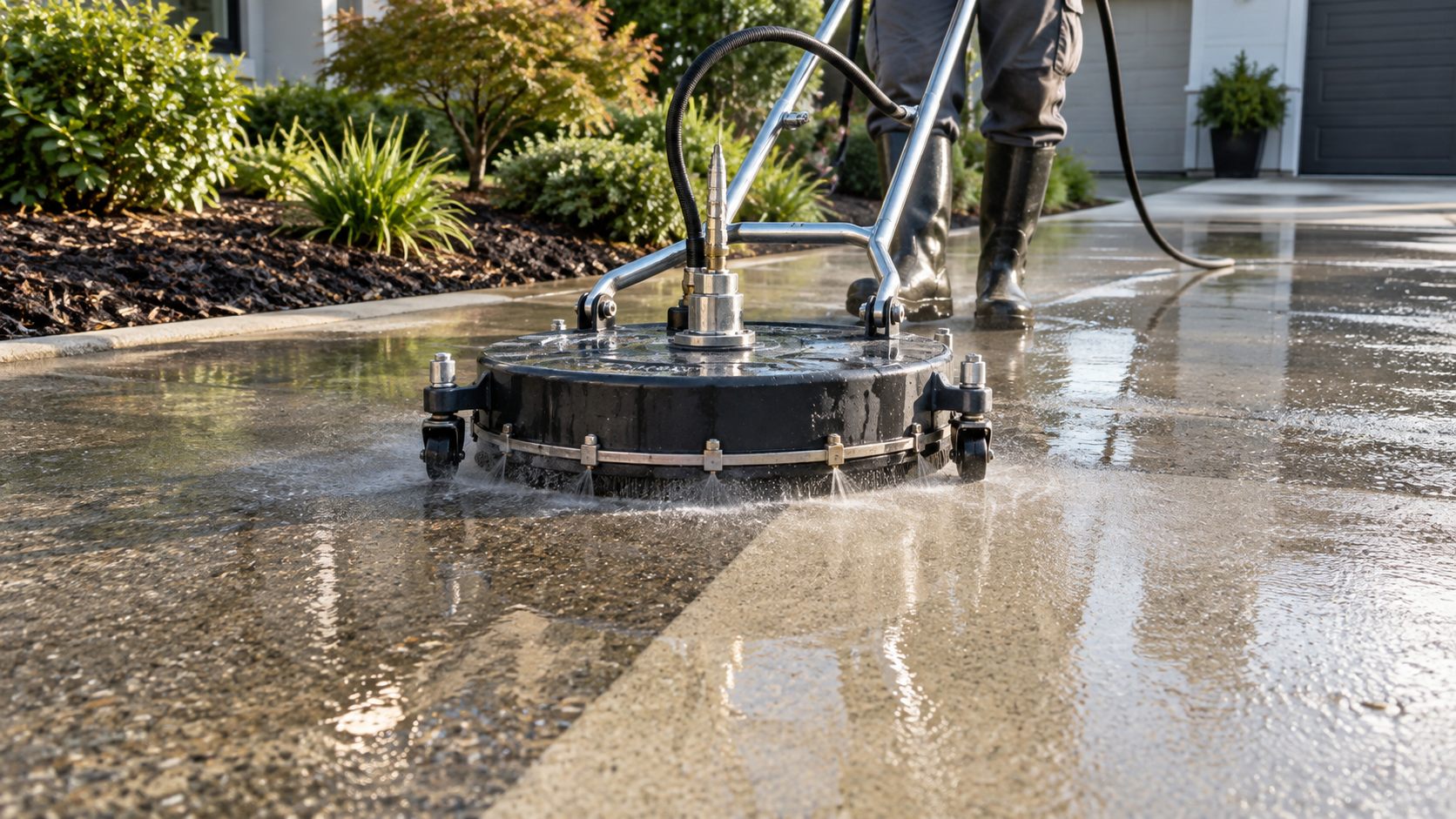
| Pressure washing | Water delivered at controlled higher pressure, with settings selected for the surface. | Compatible concrete, masonry, and hardscape. | Excess pressure can etch or damage surfaces and joints. |
| Power washing | Often refers to pressure washing with heated water. | Compatible oil, grease, and stubborn buildup on robust surfaces. | Heat can affect coatings, sealants, and nearby materials. |
| Soft washing | Lower-pressure application and rinse, often paired with a surface-compatible cleaner. | Selected siding, painted surfaces, and some roof systems after assessment. | Products, dwell time, plants, and runoff all require care. |
Decision process
Start with the material, not the machine.
We look at the finish, age, damage, type of buildup, surrounding features, and drainage. Where the answer is uncertain, a small test area or an alternative method may be appropriate.
01
Surface and finishConcrete, paint, wood, tile, and roofing differ.
02
Buildup and desired resultDirt, oil, algae, and oxidation need different care.
03
Water and site controlsNearby drains, plants, and public access matter.
Start with a clear scope